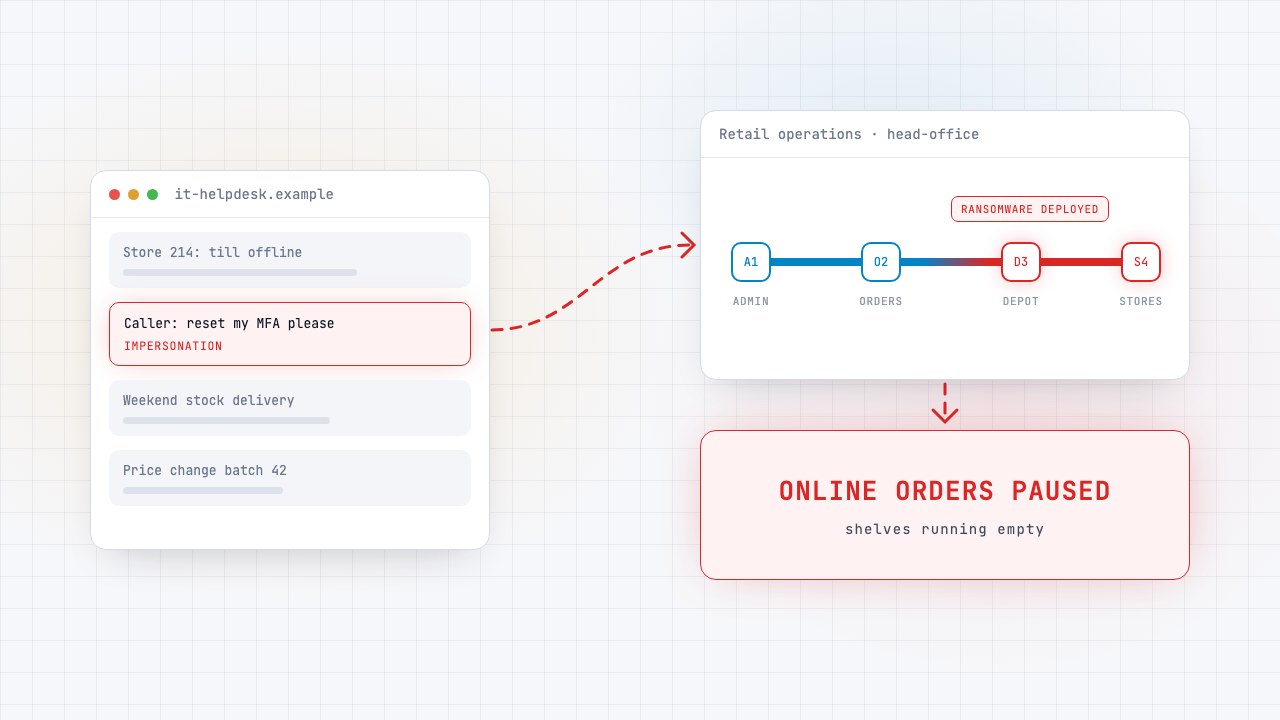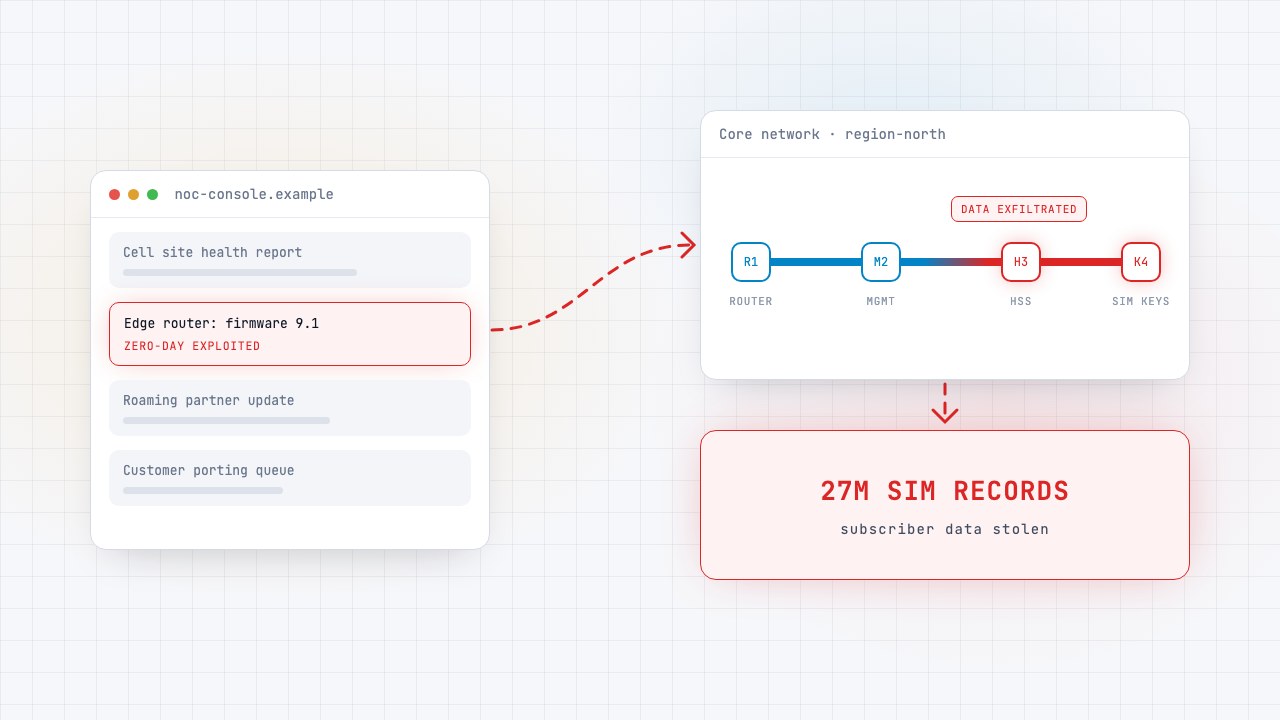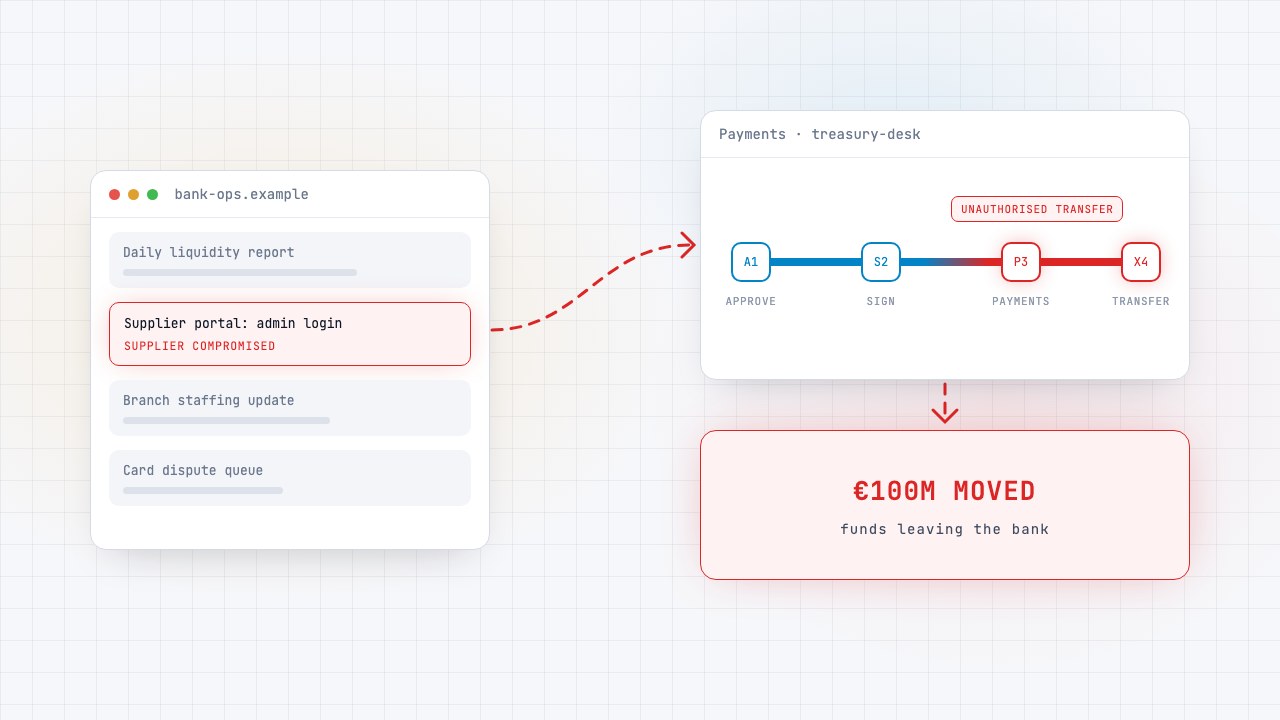

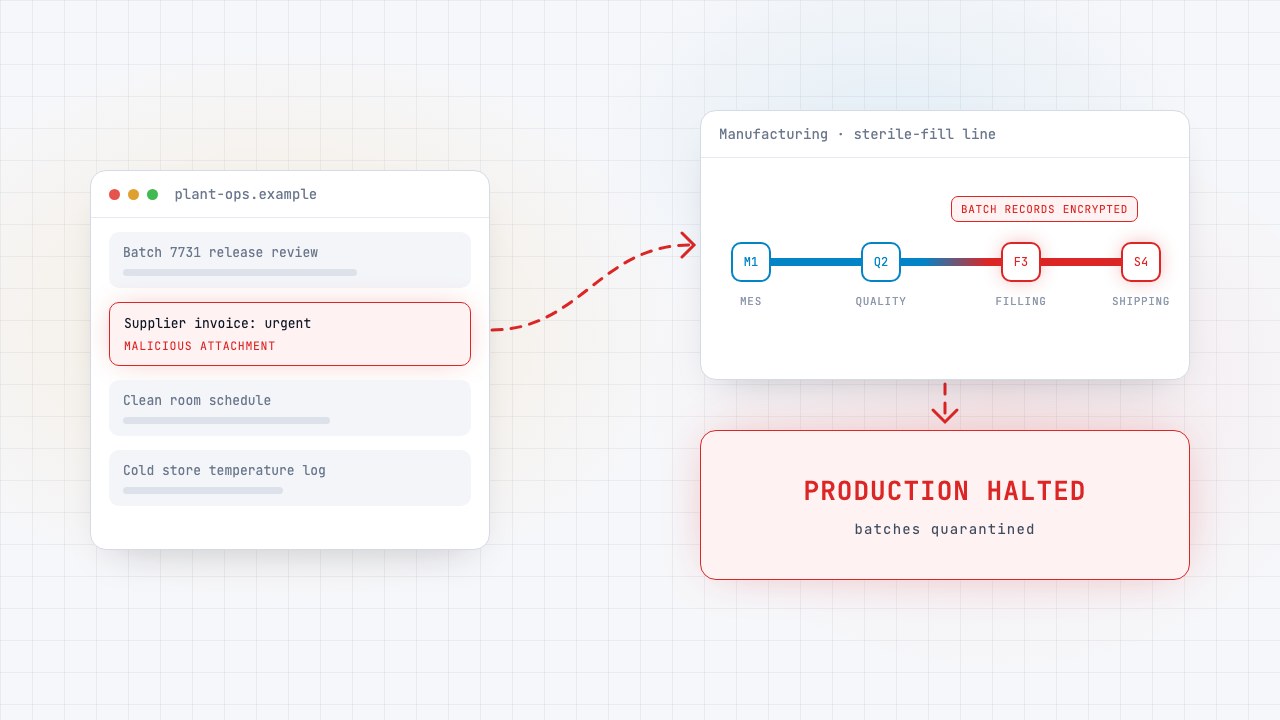
On 4 May 2026, West Pharmaceutical Services, a company that makes the vials, stoppers, syringe components and injection devices used by drug makers around the world, spotted unusual activity on its network. Attackers had stolen data and encrypted systems. West took its systems offline globally, and shipping, receiving and manufacturing stopped at multiple sites while it recovered.
Most people have never heard of West. But a huge number of injectable medicines depend on its components. An attack on one specialised supplier rippled straight into the pharmaceutical supply chain.
Pharmaceutical companies hold some of the most valuable intellectual property on earth, run tightly controlled manufacturing plants and sit at the heart of supply chains that patients depend on. That makes them a target for spies, ransomware gangs and data thieves alike.
This guide covers why pharmaceutical companies are targeted, where they are exposed, what real attacks have taught us, and how to build a practical defence.
1. Why pharmaceutical companies are a prime target
- Nation-state actors steal research, clinical trial data and manufacturing know-how that can take years and billions of dollars to develop. During the COVID-19 pandemic, vaccine research became one of the most targeted assets in the world.
- Ransomware gangs know that stopping production of medicines creates enormous pressure, from patients, hospitals and regulators.
- Data thieves target clinical trial and patient data, which is sensitive and valuable.
- Collateral damage is a real risk. Pharmaceutical companies have been badly hit by attacks aimed at someone else.
The consequences go beyond lost revenue: drug shortages, delayed clinical trials, compromised product quality and patients who can't get the medicines they need.
The numbers
- Record ransom: The drug distributor Cencora reportedly paid 75 million dollars to the Dark Angels group in 2024, the largest known ransom payment at the time.
- Billion-dollar losses: Merck sought 1.4 billion dollars from its insurers for losses from the 2017 NotPetya attack, which infected more than 40,000 computers across its global network.
- Industrial targeting rising: The industrial security firm Dragos reported that one ransomware group alone went from one industrial victim in the first quarter of 2026 to 15 in the second, including a pharmaceutical manufacturer.
2. The unique attack surface
Research
Discovery and trials
- Lab systems and instruments
- Clinical trial data
- Research collaborations
- Regulatory submissions
Manufacturing
Making medicines
- Manufacturing execution systems
- Process control and PLCs
- Quality and batch records
- Cold storage and environment
Supply chain
Getting medicines to patients
- Ingredient and component suppliers
- Contract manufacturers and labs
- Distributors and wholesalers
- Cloud and IT providers
Research
Research and development depends on lab information systems, connected instruments, huge data sets and constant collaboration with universities, contract research organisations and partners. Clinical trials involve patient data from sites around the world. All of this is valuable to competitors and foreign states.
Manufacturing
Modern pharmaceutical plants run on manufacturing execution systems, process control systems and PLCs, with strict electronic batch records and quality systems. Everything must be validated, so changing or patching a system can require lengthy testing. Cold storage and environmental controls protect products that must be kept at precise temperatures.
Supply chain
Drug makers rely on suppliers of active ingredients, components and packaging, contract manufacturers, testing labs and distributors. Many are specialists with few alternatives. When one goes down, production lines elsewhere can stop.
Problems that cut across the industry
- Validated systems: Systems used in regulated manufacturing must be validated, which makes rapid patching and change difficult.
- Long-lived equipment: Manufacturing and lab equipment can run old operating systems for many years.
- Global operations: Large pharmaceutical companies operate sites in dozens of countries on interconnected networks.
- Many partners: Research and manufacturing involve constant data sharing with external organisations.
3. Major threats facing pharmaceutical companies
Intellectual property theft
State-sponsored groups target research data, formulas, trial results and manufacturing processes. These intrusions are quiet and can last for years.
Ransomware
Ransomware can stop manufacturing, shipping and research. Because production systems often depend on IT systems for batch records, scheduling and quality, an attack on IT can halt the plant even if production equipment is untouched.
Data extortion
Some groups skip encryption and simply steal data, then demand payment to keep it private. Patient and trial data make this particularly damaging.
Supply chain attacks
Attacks on suppliers, contract manufacturers and distributors can disrupt the flow of ingredients, components and finished medicines.
Destructive malware
Malware designed to destroy rather than extort, often spread by state actors, can cause massive damage to companies that were never the intended target.
Data integrity attacks
Altering research data, batch records or quality data could undermine trust in medicines or lead to unsafe products reaching patients. Even the suspicion of tampering can force products to be quarantined.
Disinformation
Stolen documents can be doctored and leaked to undermine public trust in medicines and vaccines.
4. How an attack reaches the production line
- ITCorporate networkEmail, ERP, research collaboration tools1Phishing, stolen credentials or a poisoned update
- DMZIT/OT boundaryConnections between business and plant systems2Weak separation lets the attacker reach the plant
- MESManufacturing and quality systemsMES, electronic batch records, lab systems3Batch records and scheduling are encrypted
- ControlProcess controlPLCs, SCADA, environmental monitoring4Lines stop; product integrity is in doubt
- SupplyMedicines and patientsFinished products, distribution, hospitals!Shortages, quarantined batches, delayed treatment
In pharmaceutical manufacturing, production can't legally continue without trustworthy batch records and quality data. So an attack that encrypts manufacturing and quality systems can stop production just as effectively as one that hits the machines themselves.
5. Case studies: what real attacks have taught us
- 2017Merck and NotPetya
Destructive malware disrupted manufacturing, research and sales worldwide.
You can be collateral damage.
- 2019Eurofins Scientific
Ransomware at a testing giant disrupted forensic and lab work.
Labs are critical suppliers.
- 2020Dr. Reddy's
A cyber attack forced an Indian drug maker to isolate data centres worldwide.
Pandemic research drew attackers.
- 2020European Medicines Agency
Hackers stole and leaked COVID-19 vaccine documents.
Data can be weaponised against trust.
- 2024Cencora
A drug distributor reportedly paid a record 75 million dollar ransom.
Data theft alone can cost a fortune.
- 2024Octapharma Plasma
Ransomware closed plasma donation centres across the US.
Raw material supply is at risk too.
- 2025Inotiv
Ransomware disrupted a drug research company's operations.
Research services are targets.
- 2026West Pharmaceutical Services
Ransomware halted manufacturing at a key component supplier.
Specialist suppliers are single points of failure.
Merck and NotPetya (2017)
In June 2017, NotPetya, destructive malware disguised as ransomware and widely attributed to Russian military intelligence, spread from a compromised update to Ukrainian accounting software. Merck, one of the world's largest drug makers, was caught in the blast: more than 40,000 computers across its global network were infected, and manufacturing, research and sales were all disrupted. Production problems contributed to Merck having to borrow doses of its HPV vaccine from a US government stockpile. Merck later sought 1.4 billion dollars from its insurers, and settled a long legal battle with them in 2024.
The lesson: A pharmaceutical company doesn't need to be the target to suffer enormous damage. Software updates from suppliers in any country can carry malware, and segmentation limits how far it can spread.
Eurofins Scientific (2019)
In June 2019, ransomware hit Eurofins Scientific, one of the world's largest testing laboratory groups, which provides testing services to pharmaceutical, food and environmental companies, and forensic services to police. In the UK, police had to suspend work with Eurofins' forensic services, delaying criminal cases. Eurofins reportedly paid a ransom to restore its systems.
The lesson: Testing and lab service providers are critical links in the pharmaceutical supply chain. Drug makers need to know how their labs would cope with an attack.
Dr. Reddy's (2020)
In October 2020, Dr. Reddy's Laboratories, a major Indian generic drug maker, suffered a cyber attack shortly after receiving approval to run late-stage trials of Russia's Sputnik V COVID-19 vaccine in India. The company isolated all its data centre services, and operations at some of its plants were affected while it recovered.
The lesson: High-profile research attracts attackers. Companies involved in strategically important work need heightened security during that period.
European Medicines Agency (2020)
In December 2020, hackers broke into the European Medicines Agency, the EU's drug regulator, and accessed documents relating to the Pfizer and BioNTech COVID-19 vaccine submitted for approval. Some of the stolen documents were later leaked online, and the agency said some of the leaked correspondence had been manipulated before publication in a way that could undermine trust in vaccines.
The lesson: Pharmaceutical data shared with regulators and partners is only as secure as the weakest organisation holding it. Stolen data can also be doctored and used for disinformation.
Cencora (2024)
In February 2024, Cencora, one of the largest drug distributors in the United States, disclosed that data had been stolen from its systems, including personal and health information. Bloomberg later reported that Cencora paid 75 million dollars to the Dark Angels group, the largest known ransom payment at the time, apparently to stop the stolen data from being published. Researchers said the group hadn't deployed ransomware on the network, relying on data theft alone.
The lesson: Attackers don't need to encrypt anything to cause huge losses. Detecting and stopping large-scale data theft is as important as preventing ransomware.
Octapharma Plasma (2024)
In April 2024, Octapharma Plasma, which collects blood plasma used to make medicines for patients with immune deficiencies, bleeding disorders and other conditions, temporarily closed its US plasma donation centres after a cyber attack linked to the BlackSuit ransomware group.
The lesson: The supply of raw biological materials is part of the pharmaceutical supply chain, and it can be disrupted by attacks on collection operations.
Inotiv (2025)
In August 2025, Inotiv, a contract research company that provides drug development and research services to pharmaceutical companies, disclosed that ransomware had encrypted some of its systems and data, disrupting business operations. It moved some operations to offline alternatives to keep working. The Qilin ransomware group claimed the attack.
The lesson: Contract research organisations hold sensitive data from many clients. Drug makers should assess their partners' security and their ability to keep research going during an attack.
West Pharmaceutical Services (2026)
On 4 May 2026, West Pharmaceutical Services, a major supplier of injectable drug packaging and delivery systems, detected an intrusion. Its filing to US regulators said data had been stolen and systems encrypted. West took systems offline globally, disrupting shipping, receiving and manufacturing at multiple sites. Within about a week, it had restored core systems and restarted critical processes at some sites, while working with customers to minimise delays.
The lesson: Specialist suppliers with few alternatives are single points of failure. Drug makers need to know which suppliers they depend on most and hold contingency stock or alternative sources.
6. A practical defence framework
Protect the crown jewels
Identify the research, trial and manufacturing data that matters most. Restrict who can access it, encrypt it, and monitor for unusual access and large data transfers.
Separate manufacturing from IT
Put a properly designed DMZ between corporate IT and manufacturing networks, and divide plant networks into zones. Make sure manufacturing can keep running, at least for a while, if corporate IT is lost.
Secure validated systems
Build security into validation from the start, so that patches and changes can be applied in a planned, timely way. Where systems can't be patched, use segmentation, allowlisting and strict access control to protect them.
Lock down identity and remote access
- Use phishing-resistant multi-factor authentication for staff, administrators and partners.
- Route vendor access to plants through a monitored gateway, enabled only when needed.
- Limit administrator rights and monitor privileged accounts closely.
Protect data integrity
Use controls that make tampering with research data, batch records and quality data detectable, such as audit trails, checksums and restricted write access. Back up records in ways that preserve their integrity.
Manage supplier and partner risk
Identify the suppliers, contract manufacturers, labs and distributors you can't operate without. Assess their security, require incident notification, and keep contingency stock or alternative sources for critical items.
Detect data theft
Monitor for unusual outbound data transfers and access to sensitive repositories. Many of the most expensive incidents involve data theft without encryption.
Back up and plan recovery
Keep offline, tested backups of IT, manufacturing and quality systems, including configurations and validated software. Plan how to restore validated systems quickly and how to verify product quality after an incident.
Test, exercise and share
- Exercises: Simulate ransomware that hits manufacturing and quality systems, with production, quality and supply chain leaders involved.
- Testing: Test plant networks carefully during planned shutdowns, coordinated with operations and quality.
- Intelligence sharing: Join health and life sciences information sharing groups, such as Health-ISAC, and work with national cyber agencies.
7. Incident response for pharmaceutical companies
- DetectSecurity alert, system failure, partner or supplier notification
- TriageAre manufacturing, quality or patient data affected? Is product integrity at risk?
- Halt production?
YesStop affected lines, quarantine batches made during the incidentNoIsolate IT, keep validated production running with manual records
- ContainIsolate affected systems and partners, preserve evidence
- Eradicate and recoverRestore validated systems from clean backups
- Verify qualityConfirm data integrity and product quality before release
- LearnFix root causes and update plans
Involve quality from the start
In pharmaceutical incidents, the quality function decides whether products made during or after an incident can be released. Quality leaders must be part of the response team, not informed afterwards.
Protect product integrity
If there is any chance that manufacturing or quality data was altered, affected batches may need to be quarantined and investigated before release. Plans should define how this will be done.
Keep medicines flowing
Work with distributors, hospitals and health authorities to prioritise critical medicines and manage potential shortages.
Communicate
Customers, partners, health authorities and, where relevant, patients need clear and accurate information. Be prepared for stolen data to be leaked or manipulated, and ready to respond to disinformation.
8. Governance and culture
- Cyber is a patient and product risk: Boards should treat cyber risk as a threat to supply, quality and patients, not just to IT.
- Joint ownership: Security, manufacturing, quality and supply chain leaders must share responsibility for protecting production.
- Board metrics: Boards should track segmentation of plants, supplier risk, backup and recovery test results, and detection of data theft.
- Research culture: Scientists and researchers should understand that their work is a target and handle data accordingly.
9. Emerging issues
AI in drug discovery
AI models and the data used to train them are becoming core intellectual property, and new targets for theft and tampering.
Smart factories
Continuous manufacturing, connected equipment and cloud-based manufacturing systems improve efficiency but expand the attack surface in plants.
Decentralised clinical trials
Trials that use apps, wearables and remote monitoring collect sensitive data from patients' homes, outside traditional controls.
Biotech and cell therapies
Personalised therapies depend on tightly coordinated, digitally tracked logistics between patients, hospitals and manufacturing sites, where any disruption can affect individual patients directly.
10. Checklist: 20 questions every pharmaceutical company should ask
Use these questions to test your current position. Any question you can't answer with a confident yes is a place to start.
Visibility
- Do we know where our most valuable research and manufacturing data is stored?
- Do we have an inventory of manufacturing and lab systems, including software versions?
- Do we know which suppliers and partners we can't operate without?
Access
- Is phishing-resistant MFA used for staff, administrators and partners?
- Is vendor access to plants enabled only when needed and monitored?
- Is access to sensitive research and trial data restricted and reviewed?
Network
- Is there a DMZ between corporate IT and manufacturing networks?
- Could our plants keep running if corporate IT were lost?
- Are unpatchable validated systems protected by other controls?
Detection
- Do we monitor manufacturing networks as well as IT?
- Would we detect large amounts of research or patient data leaving the network?
- Would we detect tampering with batch records or quality data?
Resilience
- Are backups of IT, manufacturing and quality systems stored offline and tested?
- Can we restore validated systems quickly after an attack?
- Do we hold contingency stock or alternatives for critical supplies?
Response
- Is the quality function part of our cyber incident response team?
- Do we know how we would assess product integrity after an attack?
- Have we run an exercise involving manufacturing and quality in the last 12 months?
People and governance
- Are researchers and plant staff trained on phishing and data handling?
- Does the board treat cyber risk as a risk to supply, quality and patients?
Conclusion
The pharmaceutical industry is built on rigorous quality control, validation and attention to detail. Cyber attacks now test those disciplines in new ways: by stealing years of research in an afternoon, halting validated production lines, or striking a specialist supplier that nobody had thought about.
The defences are known. Protect the crown jewels. Separate manufacturing from IT. Build security into validation. Guard data integrity. Know your critical suppliers, and plan for their failure.
In pharmaceuticals, cyber security is product quality.
Sources
- SEC: West Pharmaceutical Services Form 8-K, May 2026
- Cybersecurity Dive: West Pharmaceutical starts restoring operations after ransomware attack
- The Record: Merck insurance settlement over NotPetya
- Fierce Pharma: Merck settles with insurers over 1.4 billion dollar claim
- TechTarget: The mystery of the 75 million dollar ransom payment to Dark Angels
- Security Affairs: Cencora confirmed the theft of personal and health information
- CNBC: Pfizer and BioNTech vaccine documents accessed in EMA hack
- BleepingComputer: Pharma firm Inotiv says ransomware attack impacted operations
- Dragos: Industrial ransomware analysis for Q2 2026
Build ➜ Hack ➜ Investigate ➜ Secure ➜ Audit
Master the complete cyber lifecycle with the ASCL Certified Cyber360 Professional course.
Explore the Cyber360 course