
The future belongs to professionals who can connect the vulnerability, the attack, the evidence, the response and the control failure.
For years, cybersecurity careers have been built around narrow specialisations.
One person finds vulnerabilities. Another monitors alerts. A third collects forensic evidence. An investigator reconstructs the incident. A security engineer fixes the weakness. An auditor later checks whether the control exists.
This division of labour created deep expertise. It also created dangerous gaps.
Real attacks do not arrive neatly divided into departmental responsibilities.
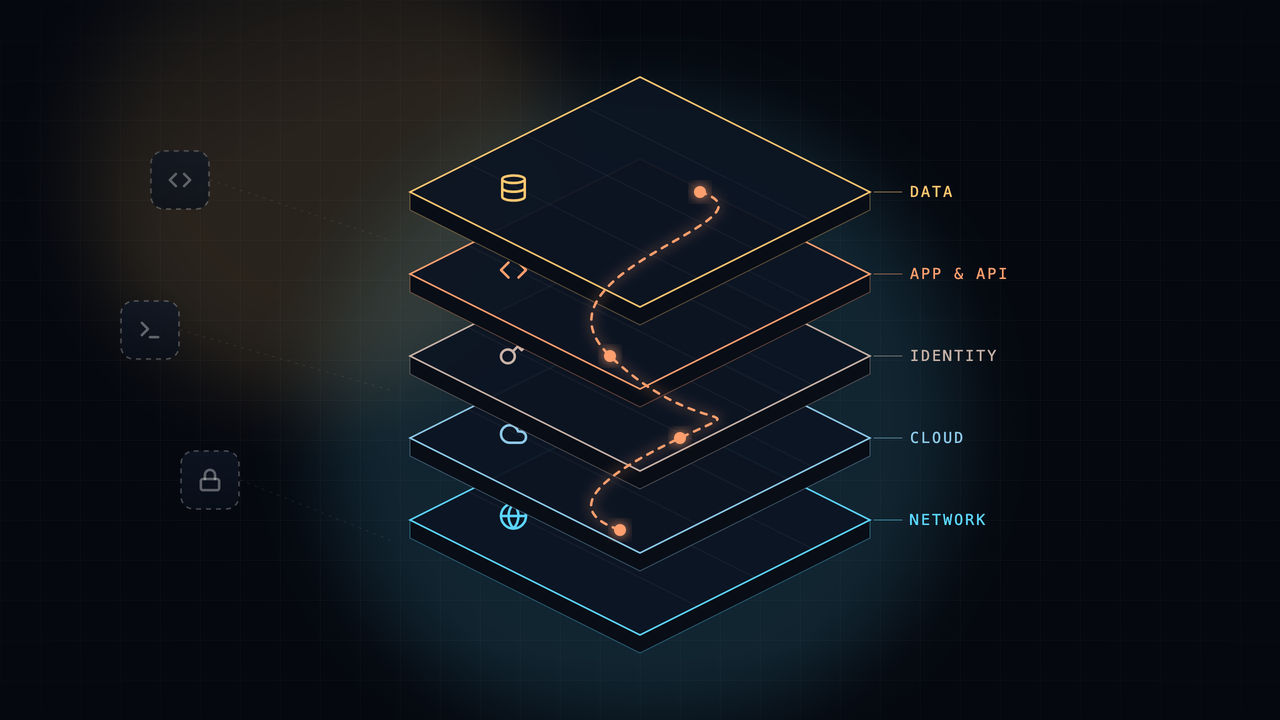
An attacker may exploit an API vulnerability, steal a cloud credential, escalate privileges, disable logging, exfiltrate data and launder the proceeds through cryptocurrency, all as part of one incident.
Responding effectively requires someone to connect every stage.
AI is accelerating the complete attack lifecycle
AI is not merely helping attackers write better phishing emails.
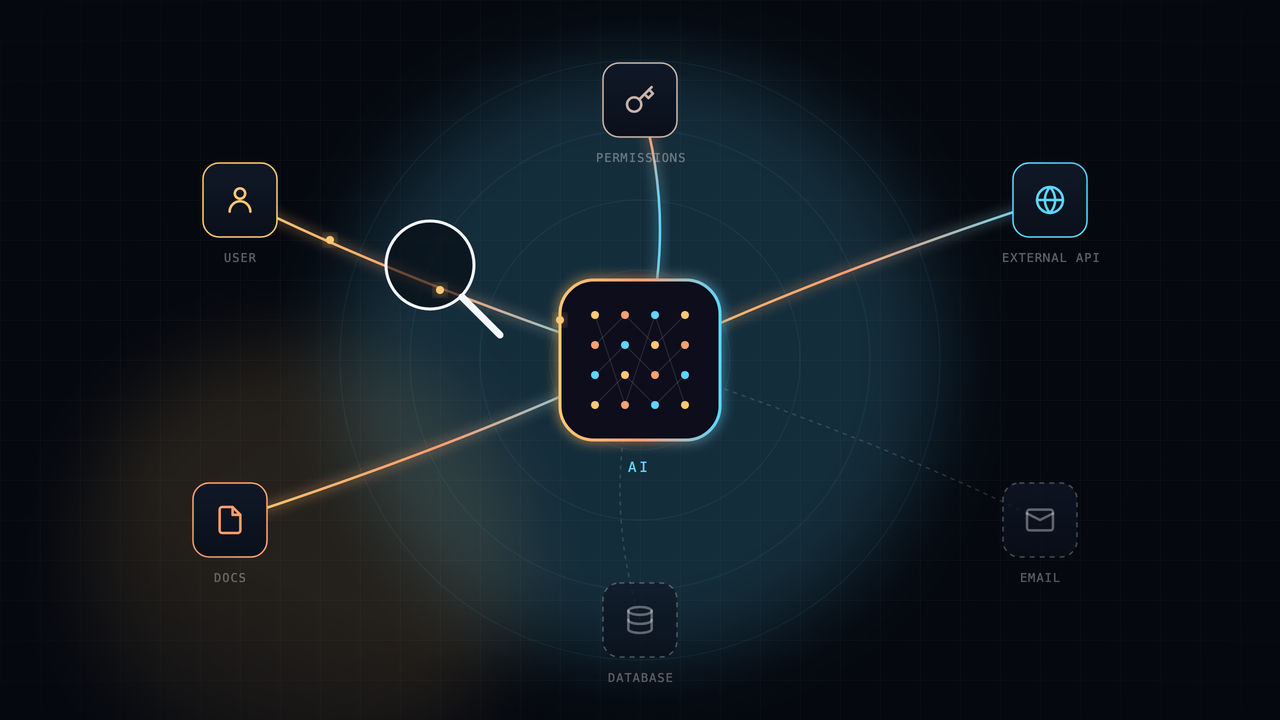
It can assist with identifying exposed systems, analysing source code, discovering vulnerabilities, generating attack variations, adapting social-engineering messages, processing stolen data and automating parts of fraud.
Defenders are also using AI to analyse logs, review configurations, investigate artefacts, generate detection rules and recommend remediation.
As both sides accelerate, the cost of fragmented understanding increases.
A penetration tester may identify how access was obtained but not recognise the evidence required to establish what happened next.
A forensic examiner may recover artefacts without understanding the vulnerability that produced them.
An investigator may establish a timeline but be unable to test whether the suspected attack path was technically possible.
An auditor may confirm that a control is documented without determining whether an attacker can bypass it.
Each professional may perform their assigned task correctly. The organisation may still fail to understand or contain the incident.
Specialists remain necessary, but specialisation is no longer sufficient
Complex incidents will continue to require deep expertise in areas such as malware analysis, cloud security, reverse engineering, digital forensics and cryptography.
The problem is not specialisation.
The problem is specialisation without a working understanding of the whole system.
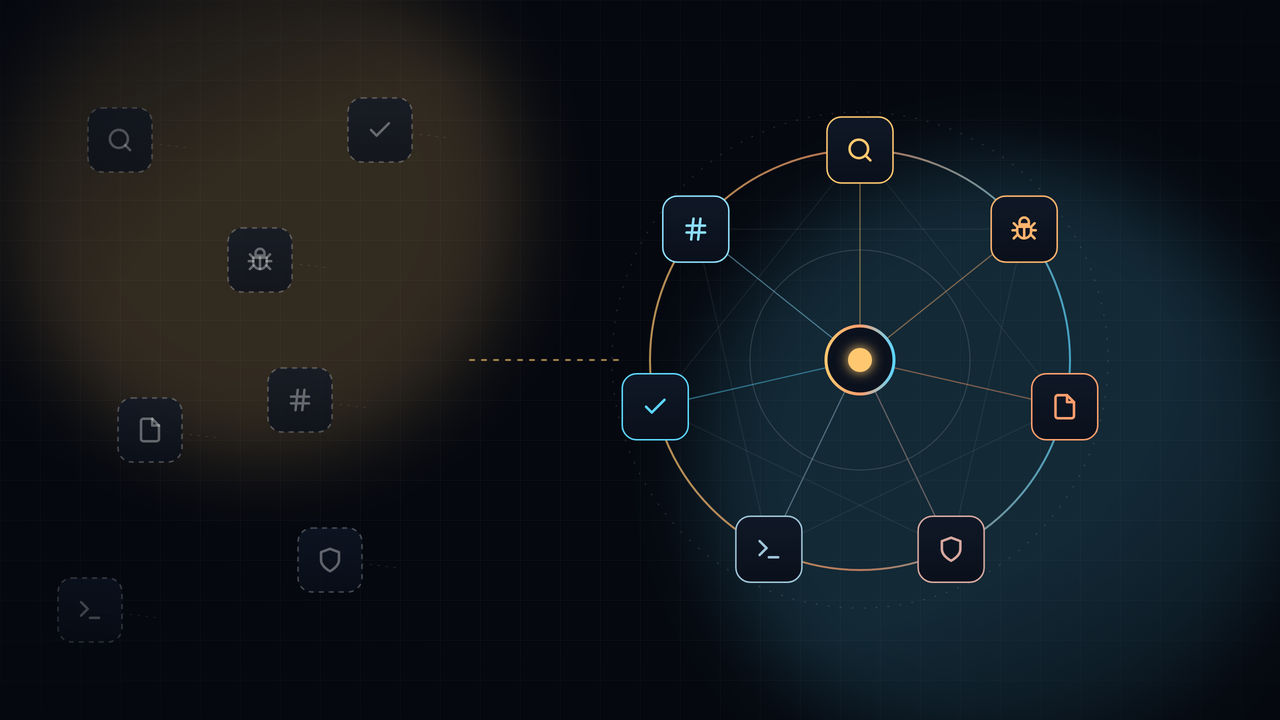
Cybersecurity now needs 360-degree professionals: people with sufficient breadth to follow an incident across technical and organisational boundaries, identify the next question and recognise when deeper specialist assistance is required.
They must be able to:
- Build a system to understand its architecture, identities, data flows and trust boundaries.
- Hack it within an authorised environment to discover how its controls can fail.
- Investigate logs, transactions, devices and application records to reconstruct what happened.
- Preserve relevant evidence with integrity and appropriate documentation.
- Secure the environment by correcting the underlying weakness.
- Audit the remediation to establish whether the controls actually work.
- Report conclusions that are technically accurate, evidence-based and defensible.
These are not seven unrelated skills. They are seven views of the same incident.
Tool knowledge is not the same as professional judgment
AI will make technical tools easier to operate. It can suggest commands, explain artefacts, generate scripts, correlate events and draft reports.
That makes tool operation less valuable as a standalone capability.
The difficult questions remain human questions:
- What are we trying to establish?
- Which evidence can be trusted?
- What does the evidence prove, and what does it not prove?
- Are there competing explanations?
- Was the activity authorised?
- Which risk should be addressed first?
- How do we verify that the remediation worked?
- Can the conclusion withstand technical, regulatory or legal scrutiny?
AI can assist with these decisions. It cannot remove responsibility for them.
Cyber education must reflect how incidents actually happen
Cybersecurity should not be taught as a collection of disconnected tools and disciplines.
Professionals should learn by working through the complete lifecycle:
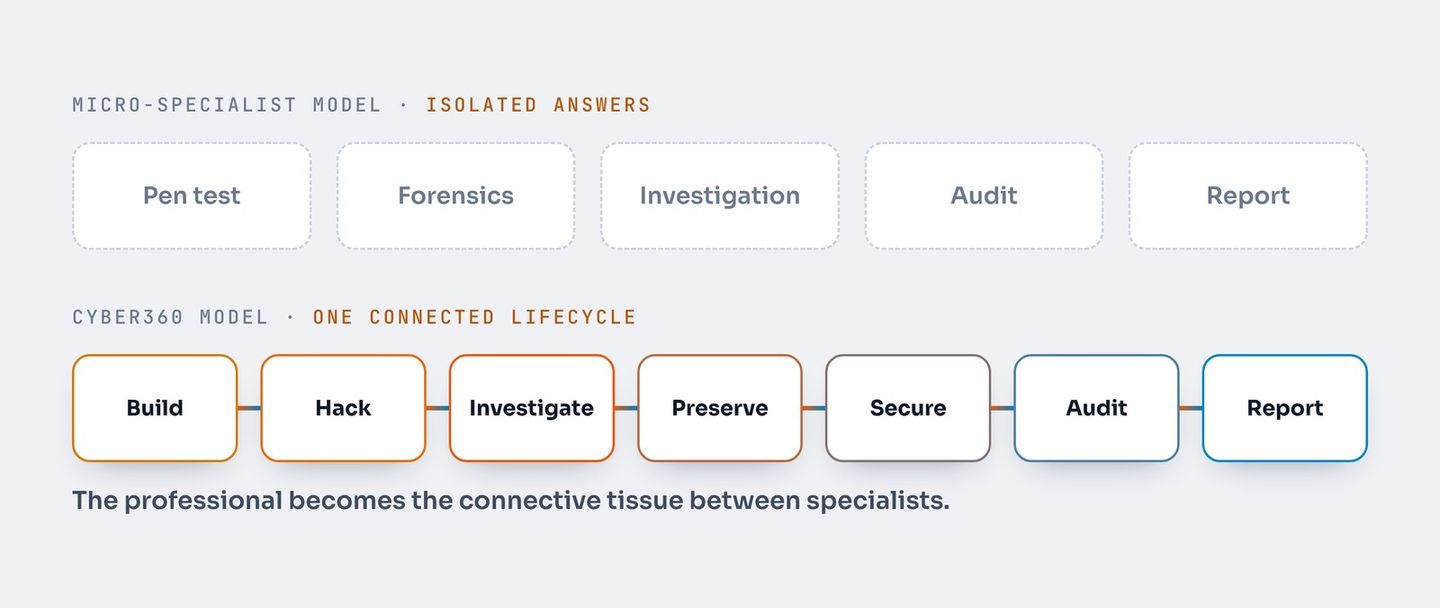
They should build real environments, introduce controlled weaknesses, exploit them safely, examine the resulting evidence, reconstruct the attack, correct the vulnerabilities and test the controls again.
That is the thinking behind Cyber360.
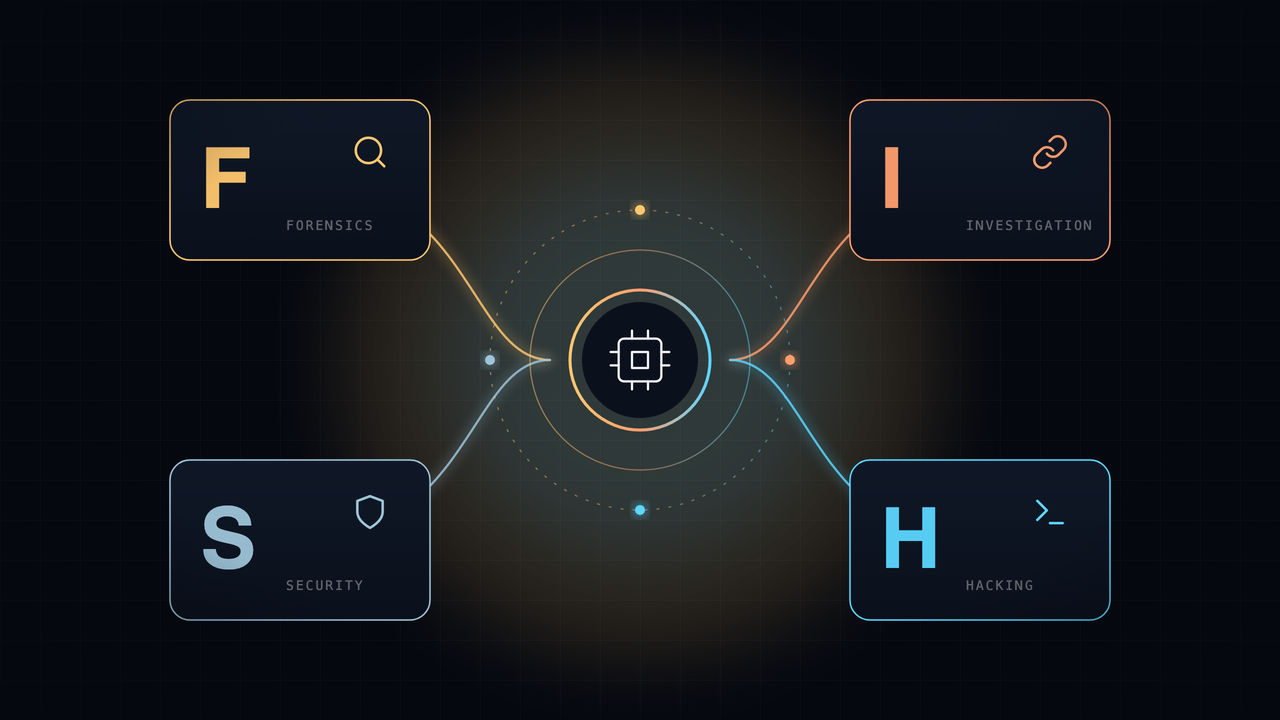
Cyber360 brings hacking, investigation, forensics, security and audit into one practical learning model. CyberFISH AI supports the professional with specialist reasoning, knowledge, workflows, checklists and tools across the lifecycle.
The objective is not to produce someone who knows everything.
It is to produce someone who can see the whole incident, connect the evidence and make sound decisions.
The age of the isolated cyber micro-specialist has ended.
The age of the 360-degree cyber professional has begun.
Build ➜ Hack ➜ Investigate ➜ Secure ➜ Audit
Master the complete cyber lifecycle with the ASCL Certified Cyber360 Professional course.
Explore the Cyber360 course